Key takeaways
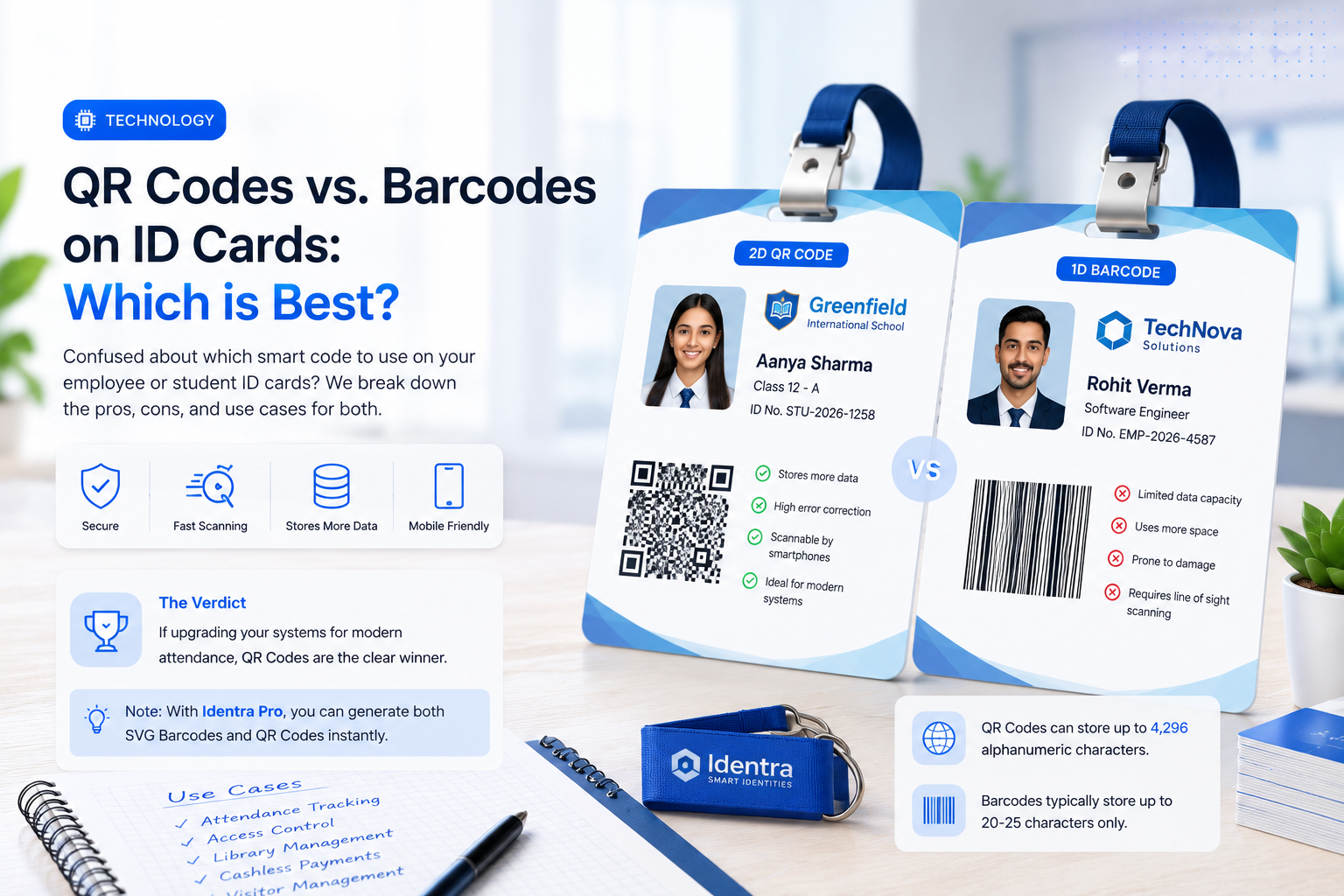
- Traditional 1D barcodes are simple and widely supported by older scanners.
- QR codes can hold more information and are readable by most modern smartphones.
- The best choice depends on your scanner hardware, workflow, and security requirements.
Automate Bulk ID Cards & AI Face Attendance
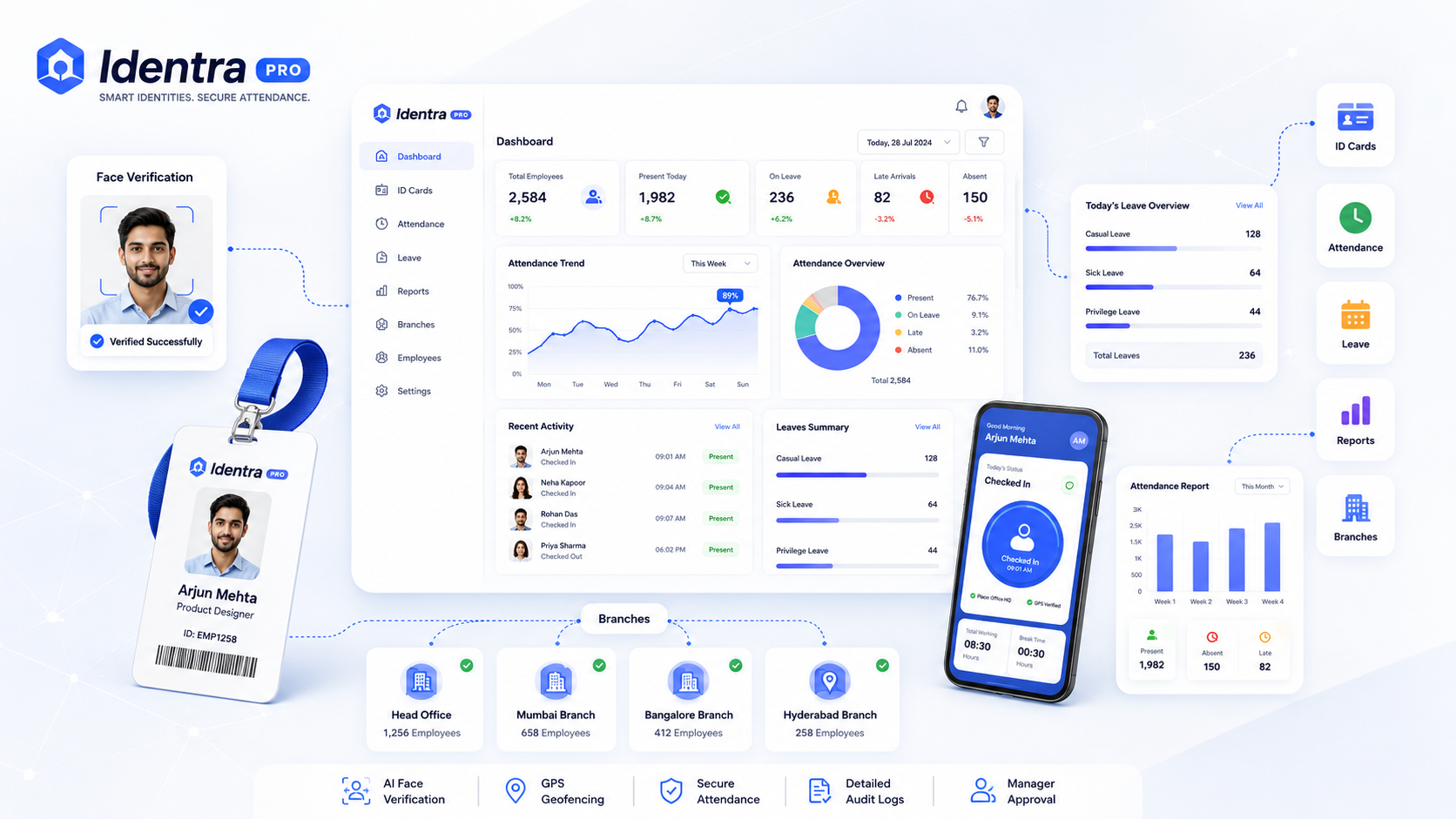
Generate print-ready ID cards, verify employee punch-in via AI Face ID + GPS geofencing, and manage leave records in one workspace.
Adding a scannable code to an employee or student ID card can support attendance, access verification, library management, visitor checks, and internal record lookup.
Traditional Barcodes
A traditional barcode stores data using vertical lines of different widths.
Advantages
- Compatible with many legacy barcode scanners
- Fast to scan
- Simple to generate
- Useful for short employee or student IDs
Limitations
- Stores limited information
- Requires more horizontal space
- Can become unreadable when damaged
QR Codes
A QR code stores data in a two-dimensional square pattern.
Advantages
- Stores more information
- Readable by smartphones
- Supports error correction
- Uses less card space
- Can link to secure verification pages
Limitations
- Older 1D scanners may not support QR codes
- Static QR codes should not be treated as identity verification by themselves
Which One Is Better?
Use barcodes when your organization depends on existing 1D scanner hardware. Use QR codes when you need smartphone scanning, more data capacity, or web-based identity verification.
Identra Pro can generate both QR codes and barcodes, allowing organizations to choose the format that fits their current infrastructure.
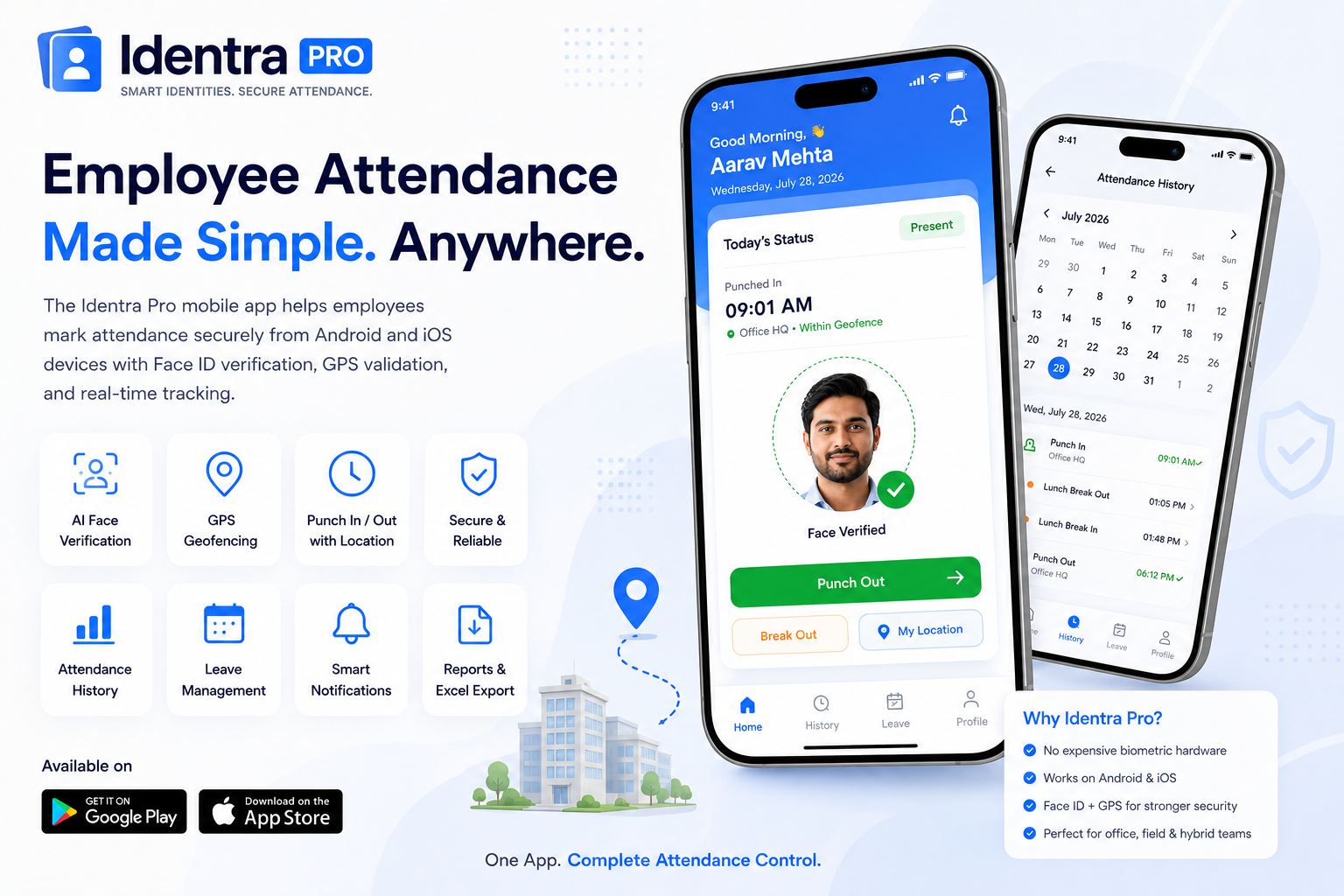
Zero Hardware, 100% Verified Attendance
No expensive biometric machines needed. Employees punch in with live selfie capture, GPS geofencing, leave tracking, and instant manager alerts.
Stop proxy attendance and automate your workforce.
Create smart ID cards, verify every punch with AI Face ID and GPS, manage leave, reports and multiple branches from one secure workspace.